

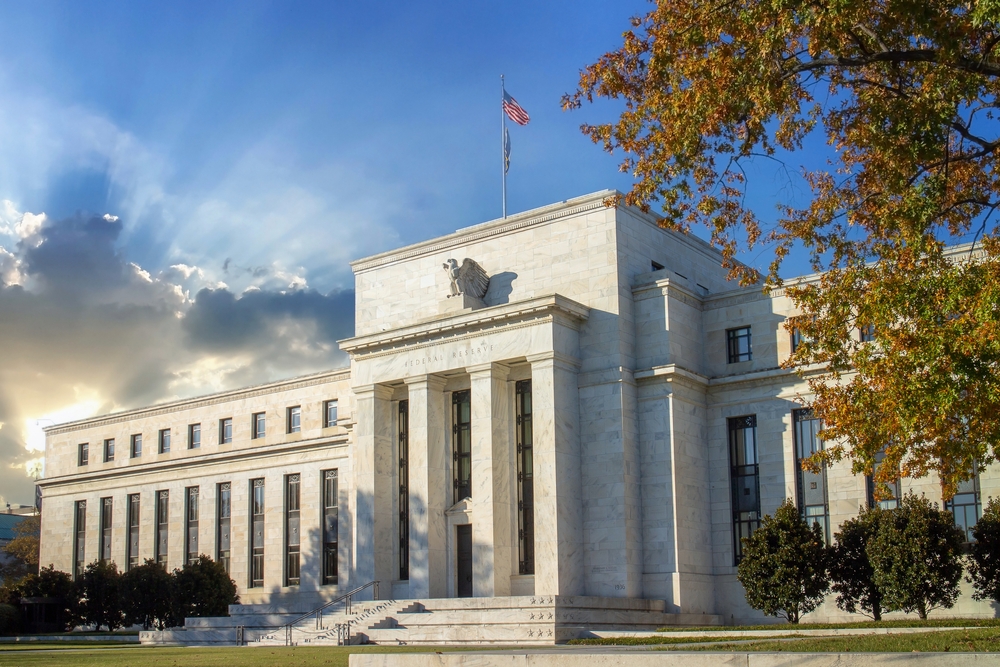
For someone who started his tenure as Fed chair with an emphasis on talking less and letting the data and policy do the work, Fed Chair Warsh had a lot to say in Jackson Hole last week. During his address, Warsh signaled to attendees that the fight with inflation may not be over and that the Fed will “have work to do” if policymakers don’t gain more confidence that inflation is trending towards 2%. Not unsurprisingly, markets responded with September rate-hike odds jumping from roughly 35% to 46% within hours on CME futures, the 2-year Treasury yield increased, and the dollar strengthened. See below for the latest probabilities from CME:

Two days later, the Fed’s own favorite inflation gauge supported his words. July PCE came in at 3.7% year-over-year, with core PCE holding at 3.35%, capping the worst four-to-five month stretch for inflation since 2023. Core services, which make up more than 60% of consumer spending, and information technology equipment prices were major drivers, both categories that tend to be sticky rather than transitory.
The irony is strong given Warsh’s views on how previous Federal Reserve chairs used their words to push markets around. Of course, Warsh’s words were intentional, and they cracked open the door to a potential hike in September despite other data that, on the surface, was still pointing markets toward higher for longer rather than higher outright. What we are seeing now is not just a repricing of potentially higher rates, but a repricing of a level of uncertainty that simply wasn’t there before.
September’s Reputation Precedes It, and So Does the Midterm Curse
Did you know that September has the worst historical track record of any month on the calendar? According to a recent Motley Fool article, going back to 1928, the S&P 500 has averaged a loss of roughly 1.2% in September and finished the month lower about 56% of the time, making it the only month with a negative long-term average return. This year layers on a second wrinkle because 2026 is a midterm election year, and midterm years carry their own well-earned reputation as the weakest stretch of the four-year presidential cycle.
Studies (including this one from Chase) of the post-war period show the S&P 500 gaining somewhere in the mid-single digits on average during midterm years, meaningfully below the high-single to double-digit averages posted in the other three years of the cycle. Historically speaking, the pattern within the year holds up just as well with the first three quarters of a midterm year tending to run flat to slightly negative as election uncertainty weighs on sentiment, followed by a historically strong fourth quarter once results are known, and then one of the best six-to-twelve month stretches of the entire cycle the year after. So if this September feels bumpy, this wouldn’t be an anomaly.
With that said, we’d caution against reading too much into either pattern. September finishes positive nearly as often as it finishes negative, and plenty of midterm years have quietly ignored the pattern altogether, including several fairly recently. History describes a tendency, not a guarantee, and we’d rather help people understand why markets might get choppier over the next couple months than mistake normal seasonal noise for a sign something has gone wrong.
Playing It Safe May Be the Biggest Risk You Don’t See
One of our favorite topics to discuss is risk. When people talk about investment risk, they almost always mean the risk of loss. Behavioral finance research has shown for decades that investors feel the pain of a loss far more acutely than the joy of an equivalent gain. But that same instinct, taken too far, carries a cost of its own. Playing it too safe for too long, sitting in cash or holding an overly conservative portfolio, is a risk that rarely gets talked about, and it can be just as expensive.
Money market and cash-equivalent yields are attractive enough right now that sitting in cash feels like the reasonable, even prudent choice, especially with a Fed chair talking about rate hikes instead of rate cuts. See below for how different asset classes have performed since 1996:
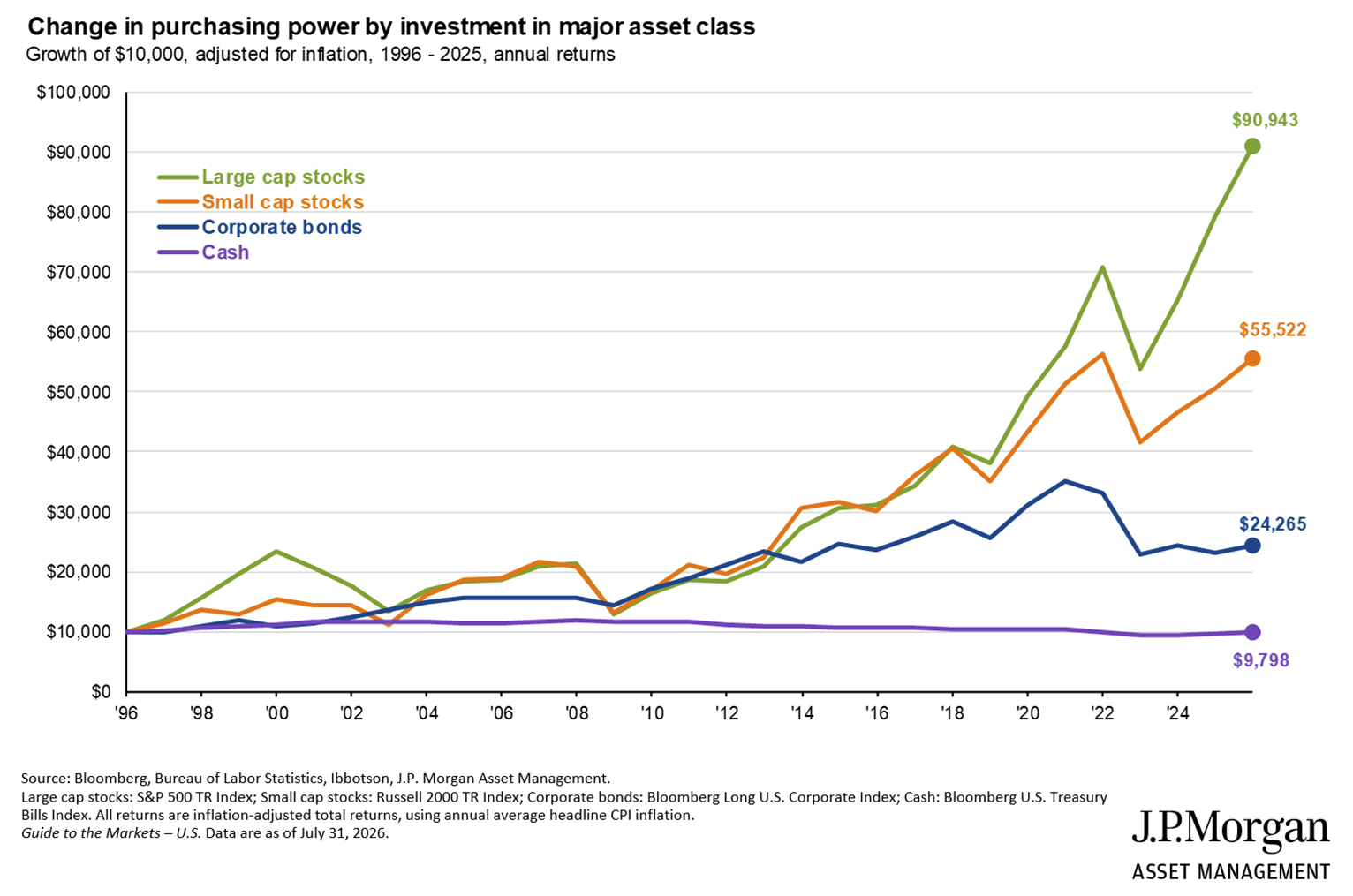
Sitting in cash or corporate bonds can absolutely make sense for parts of a portfolio, but investors who under-allocate to equities over a long enough stretch leave a meaningful amount of money on the table. A portfolio that never has a bad year but also never keeps pace with inflation and growth isn’t actually the safe choice. It’s a different kind of loss that shows up quietly over decades instead of on a screen you check every day. This is why the conversation worth having isn’t “how do I avoid all risk,” it’s “what’s the right amount of risk for the amount of time I have,” and for most long-horizon investors, the honest answer involves taking on more risk than less.
Hope you have a great week, and remember, volatility is the price of admission.
Best,
Park City Investment Solutions Team
This material is for informational purposes only and does not constitute investment advice or a recommendation to buy or sell any security. Opinions expressed are as of the date of publication and are subject to change. Past performance is not indicative of future results.
