


After the “bad news is good news” report from two weeks ago, Wednesday’s CPI report gave markets even more of what they were hoping for as headline CPI cooled to 3.4% and core CPI eased to 2.5%. Risky assets responded positively on the news because the Fed now has even more data to support a path of not hiking. In fact, the probability of a Fed hike in September has gone from 50% to 32.5% over the last month, likely driven by weaker jobs data and softer CPI numbers.
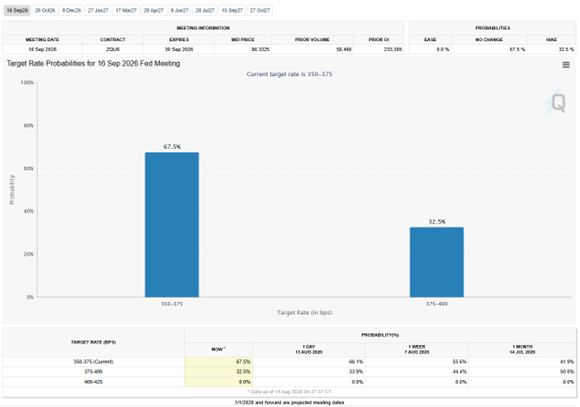
Digging into the CPI numbers, as some economists have pointed out, shelter and services costs are the stickiest and most stubborn categories in this inflation fight and they did not cool as much as the headline number suggests, and some of the other soft data looks more like a one-off than a trend. We think this is important to point out because while the overall numbers are trending in the right direction, we still think inflation will remain higher for longer. Just because inflation is cooling doesn’t mean the Fed has won the battle to get inflation back to its long-term target of 2%.
Retail Sales Take Their Biggest Fall in Over a Year
Despite a stretch of resilient consumers and incredible earnings, July’s retail sales numbers came in weaker than expected. Retail sales fell 0.6% for the month, marking the sharpest monthly decline in more than a year. It followed a solid run of consumer spending, so some pullback should not be a surprise on its own, but the timing is noteworthy, coming just weeks after a jobs report that showed a labor market losing steam underneath a still-low unemployment rate.
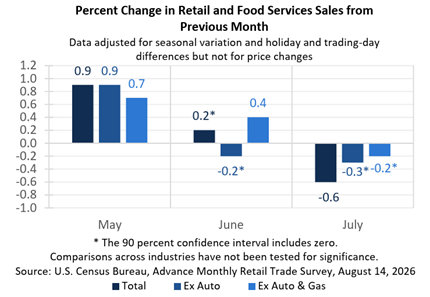
We are not reading too much into any single month of retail data, spending numbers are notoriously noisy and get revised often. With that said, if softer hiring starts to translate into more cautious consumers, that’s a meaningfully different environment for equities than the one priced in over the last several months, where strong earnings and resilient consumer spending have supported stock valuations.
The Value of a Financial Advisor
We have all heard the question before: “Do I really need a financial advisor?” It can be hard sometimes to quantify the many things that advisors do that feel unquantifiable, but this didn’t stop Vanguard from trying to do exactly that. And in their most recent research from last year, Vanguard highlighted eight different ways advisors can add value to their clients portfolio and the value that these things could potentially add. See a snapshot from the research below:
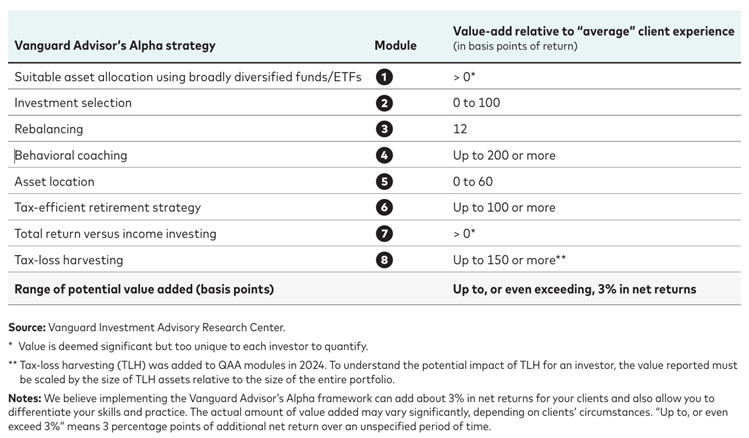
A few things that we think it is important to point out. One of the most important factors they identified is “behavioral coaching” or what we would call “helping people be disciplined.” We have found that advisors can potentially add incredible value by simply helping their clients find discipline during periods of significant market volatility. Beyond that, Vanguard found that factors such as investment selection, tax-efficient retirement strategy, and tax-loss harvesting can add significant value. So the next time someone asks whether they need a financial advisor, the answer should be yes and this is why.
Hope you have a great week, and remember, volatility is the price of admission.
